From Manual AWS Deployments to Terraform IaC at Sentia
As our infrastructure at Sentia continued to grow, managing AWS resources manually became increasingly risky and difficult to maintain.
Initially, manual deployments through the AWS Console felt fast and simple. Creating EC2 or ECS services, updating security groups, or changing infrastructure settings only took a few clicks. However, over time, this approach created operational problems that affected reliability and scalability.
Manual deployments are highly dependent on individuals. Important infrastructure knowledge often exists only in someone’s memory, making deployments risky when key engineers are unavailable. Small undocumented changes can also create inconsistencies between staging and production environments, leading to difficult debugging and unexpected deployment failures.
To solve this, we moved toward Infrastructure as Code using HashiCorp Terraform and automated deployment workflows.
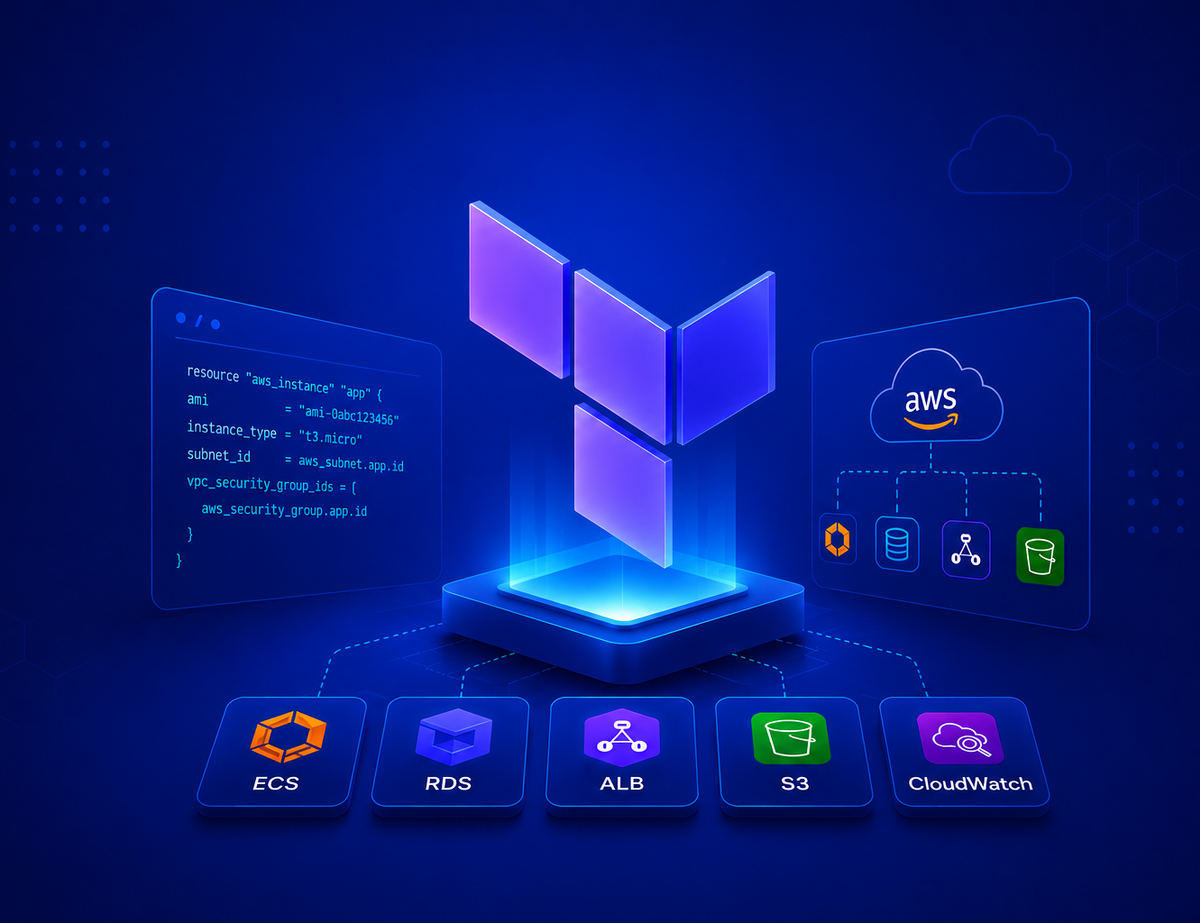
Terraform allowed us to define our AWS infrastructure as code instead of manually configuring resources through the AWS Console. We began managing resources such as:
- ECS Fargate services
- Application Load Balancers
- RDS PostgreSQL databases
- IAM roles and policies
- Route53 DNS records
- CloudWatch logging
Combined with GitHub Actions, infrastructure deployments became more consistent, reviewable, and automated.
One of the biggest improvements was reducing operational risk. Infrastructure changes are now tracked through pull requests, reviewed by the team, and reproducible across environments. This significantly reduced deployment uncertainty and removed the dependency on manual processes.
The migration also improved onboarding for engineers, since infrastructure configurations are now documented directly in Terraform code instead of hidden across AWS Console settings.
Moving from manual AWS management to Terraform required upfront effort, but the long-term benefits quickly became clear:
- more reliable deployments
- better environment consistency
- safer infrastructure changes
- reduced dependency on individuals
- improved team collaboration
As systems continue to scale, Infrastructure as Code has become an essential part of building reliable cloud platforms at Sentia.